

The Belgium national football team has represented Belgium in men's international football since their maiden match in 1904. The squad is under the global jurisdiction of FIFA and is governed in Europe by UEFA—both of which were co-founded by the Belgian team's supervising body, the Royal Belgian Football Association.
Periods of regular Belgian representation at the highest international level, from 1920 to 1938, from 1980 to 2002 and again from 2014 onwards, have alternated with mostly unsuccessful qualification rounds. Most of Belgium's home matches are played at the King Baudouin Stadium in Brussels.
Belgium's national team have participated in three quadrennial major football competitions. It appeared in fifteen FIFA World Cups and seven UEFA European Championships, and featured at four Olympic football tournaments, including the 1920 Summer Olympics which they won. Other notable performances are victories over four reigning world champions—West Germany, Brazil, Argentina and France—between 1954 and 2002. Belgium has long-standing football rivalries with its Dutch and French counterparts, having played both teams nearly every year from 1905 to 1967. The squad has been known as the Red Devils since 1906; its fan club is named "1895".
Belgium finished in third place as hosts at UEFA Euro 1972. After that, they experienced two golden generations. In the first period, which lasted from the 1980s to the early 1990s, the team finished as runners-up at UEFA Euro 1980 and fourth in the 1986 FIFA World Cup. In the second, under the guidance of Marc Wilmots and later Roberto Martínez in the 2010s, Belgium topped the FIFA World Ranking for the first time in November 2015 and finished third at the 2018 FIFA World Cup. To date, Belgium is the only national team to top the FIFA ranking without having won a World Cup or continental trophy.
Early history
Belgium was one of the first mainland European countries to play association football, with the earliest recorded example of its practice in Belgium dating back to 1863.
On 11 October 1900, Beerschot AC honorary president Jorge Díaz announced that Antwerp would host a series of challenge matches between Europe's best football teams. After some organisational problems, on 28 April 1901, Beerschot's pitch hosted its first tournament, in which a Belgian selection and a Dutch team made up of players from third-level sides led by ex-footballer Cees van Hasselt contested the Coupe Vanden Abeele. Naturally, the hosts had little trouble claiming the cup, defeating the Netherlands by 8–0. Belgium then beat the Netherlands in all three follow-up matches; FIFA does not recognize these results because Belgium fielded some English players, such as Herbert Potts, who scored 12 of "Belgium's" 17 goals.
On 1 May 1904, the Belgians played their first official match, against France at the Stade du Vivier d'Oie in Uccle; their draw left the Évence Coppée Trophy unclaimed. Twenty days later, the football boards of both countries were among the seven FIFA founders. At that time, the Belgian squad was chosen by a committee chaired by Édouard de Laveleye, who usually drew from the country's six or seven major clubs. Belgium would play twice a year against the Netherlands beginning from 1905 onwards, generally once in Antwerp and once in Rotterdam. From these beginnings until 1925, Belgian-Dutch cup trophies would be awarded in the "Low Countries derby".
In 1906, the national team received the nickname Red Devils because of their red jerseys, and four years later, Scottish ex-footballer William Maxwell replaced the UBSSA committee as their manager. From 1912, UBSSA governed football only and was renamed UBSFA. During the Great War, the national team only played unrecognized friendlies, with matches in and against France.
Belgio on FootNews
All real-time news on the Belgium men's national football team (Belgium) from hundreds of sources: squad, call-ups, UEFA Nations League statistics, fixtures, market values and history.
 UEFA Nations League
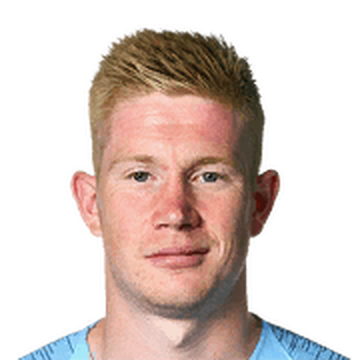 Kevin De Bruyne
 Diego Moreira
 Charles De Ketelaere