
Barcelona news from every source, in real time: today's stories, matches, table and fixtures, the club's official content and its history, from five UEFA Champions League crowns to twenty-seven La Liga titles and thirty-one Copa del Rey trophies.
 La Liga
 Alavés
 Athletic Bilbao
 Atlético Madrid
Futbol Club Barcelona (Catalan pronunciation: [fudˈbɔl ˈklub bəɾsəˈlonə] ), commonly known as FC Barcelona and colloquially as Barça ([ˈbaɾsə]), is a professional football club based in Barcelona, Catalonia, Spain, that competes in La Liga, the top division of Spanish football.
Founded in 1899 by a group of Swiss, Catalan, German, and English footballers led by Joan Gamper, the club has become a symbol of Catalan culture and Catalanism, hence the motto Més que un club ("More than a club"). Unlike many other football clubs, the supporters own and operate Barcelona. It is the third-most valuable football club in the world, worth $5.6 billion, and the world's fourth richest football club in terms of revenue, with an annual turnover of €800.1 million. The official Barcelona anthem is the "Cant del Barça", written by Jaume Picas i Guiu and Josep Maria Espinàs. Barcelona traditionally play in dark shades of blue and garnet stripes, hence nicknamed Blaugrana.
Barcelona are one of the world's most decorated clubs. Domestically, Barcelona has won a record 82 trophies: 29 La Liga, 32 Copa del Rey, 2 Copa de la Liga, 16 Supercopa de España and 3 Copa Eva Duarte titles, as well as being the record holder for the latter four competitions. In international club football, Barça has won 22 European and worldwide titles: five UEFA Champions League titles, a record four UEFA Cup Winners' Cups, a record three Inter-Cities Fairs Cups, five UEFA Super Cups, a joint record two Latin Cups and three FIFA Club World Cups. Barcelona was ranked first in the International Federation of Football History & Statistics Club World Ranking for 1997, 2009, 2011, 2012 and 2015, and occupies the ninth position on the UEFA club rankings as of May 2023. The club has a long-standing rivalry with Real Madrid, and matches between the two teams are referred to as El Clásico.
Barcelona is one of the most widely supported teams in the world, and the club has one of the largest social media followings in the world among sports teams. Barcelona players have won a joint record twelve Ballon d'Or awards, with recipients including Johan Cruyff, as well as a record six FIFA World Player of the Year awards, with winners including Romário, Ronaldo, Rivaldo, Ronaldinho and Lionel Messi. In 2010, three players who came through the club's youth academy—Lionel Messi, Andrés Iniesta and Xavi—were chosen as the three best players in the world in the Ballon d'Or ranking, an unprecedented feat for players from the same football academy. Additionally, players representing the club have won a record eight European Golden Shoe awards.
Barcelona is one of three founding members of the Primera División that have never been relegated from the top division since its inception in 1929, along with Athletic Bilbao and Real Madrid. In 2009, Barcelona became the first Spanish club to win the continental treble consisting of La Liga, Copa del Rey and UEFA Champions League titles, and also became the first European football club to win six competitions in a single year. In 2011, the club became European champions again, winning five trophies. This Barcelona team, which won fourteen trophies in just four years under manager Pep Guardiola, is considered by some in the sport to be the greatest of all time. By winning their fifth Champions League trophy in 2015 under Luis Enrique, Barcelona became the first European football club in history to achieve the continental treble twice.
1899–1922: Beginnings
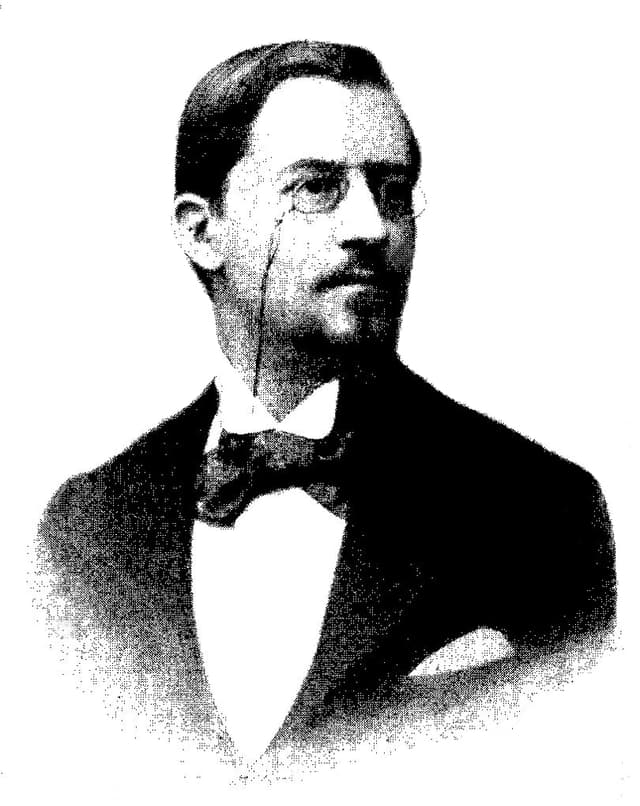
On 22 October 1899, Swiss Hans Gamper placed an advertisement in Los Deportes declaring his wish to form a football club; a positive response resulted in a meeting at the Gimnasio Solé on 29 November. Eleven players attended – Walter Wild (the first president of the club), Luis de Ossó, Bartomeu Terradas, Otto Kunzle, Otto Maier, Enric Ducal, Pere Cabot, Carles Pujol, Josep Llobet, John Parsons, and William Parsons – and formed Foot-Ball Club Barcelona.
Barcelona had a successful start in regional and national cups, competing in the Campionat de Catalunya and the Copa del Rey. In 1901, the club participated in the first football competition played on the Iberian Peninsula, the Copa Macaya, narrowly losing to Hispania AC, but in the following year, Barça won the tournament, the club's first-ever piece of silverware, and then participated in the first Copa del Rey, losing 1–2 to Bizcaya (a combination of players from Athletic Club and Bilbao FC) in the final. In 1908, Hans Gamper – now known as Joan Gamper – became club president, attempting to prevent Barcelona from shutting down. The club was struggling financially, socially, and in performance. They had not won a competition since the Campionat de Catalunya in 1905. He said in a meeting: "Barcelona cannot die and must not die. If there is nobody who is going to try, then I will assume the responsibility of running the club from now on." He was club president on five occasions from 1908 to 1925. One of his main achievements was ensuring Barça acquired its own stadium and thus generated a stable income.
On 14 March 1909, the team moved into the Camp de la Indústria, a stadium with a capacity of 8,000. To celebrate their new surroundings, the club conducted a logo contest the following year. Carles Comamala won the contest, and his suggestion became the crest that the club still wears – with some minor changes – as of the present day.
The stadium is regarded as the main element that helped the club grow in the 1910s and become a dominant team, winning three successive Campionats de Catalunya between 1909 and 1911, three Copa del del Rey in four years between 1910 and 1913, and four successive Pyrenees Cup between the inaugural year in 1910 and 1913. The Pyrenees Cup was one of the earliest international club cups in Europe. It consisted of the best teams of Languedoc, Midi and Aquitaine (Southern France), the Basque Country and Catalonia, all former members of the Marca Hispanica region. The contest was the most prestigious in that era. Notable figures of Barça's first great team include Carles Comamala, Alfredo Massana, Amechazurra, Paco Bru, and Jack Greenwell. The latter became the club's first full-time coach in 1917.
During the same period, the club changed its official language from Castilian to Catalan and gradually evolved into an important symbol of Catalan identity. For many fans, participating in the club had less to do with the game itself and more with being a part of the club's collective identity. On 4 February 1917, the club held its first tribute match to honour Ramón Torralba, who played from 1913 to 1928. The match was against local side Terrassa where Barcelona won the match 6–2.
Gamper simultaneously launched a campaign to recruit more club members, and by 1922, the club had more than 20,000, who helped finance a new stadium. The club then moved to the new Les Corts (named after the neighbourhood where it is), which they inaugurated the same year. Les Corts had an initial capacity of 30,000, and in the 1940s it was expanded to 60,000.
In 1912, Gamper recruited Paulino Alcántara, the club's seventh all-time top-scorer. In 1917, Gamper also recruited Jack Greenwell as Barcelona's first full-time manager. After this hiring, the club's fortunes began to improve on the field and soon enjoyed its first "golden age". Along with Alcántara, the Barça team under Greenwell also included Sagibarba, Ricardo Zamora, Josep Samitier, Félix Sesúmaga, and Franz Platko. This team won nine out of ten Campionats de Catalunya between 1919 and 1928 and two Copa del Rey titles in 1920 and 1922. In total, during the Gamper-led era, Barcelona won eleven Campionats de Catalunya, six Copa del Rey and four Pyrenees Cups.